Showing posts with label Leslie Park. Show all posts

Friday, August 25, 2017

Barn Painting

When I first started at the City of Ann Arbor in 2009, one of the first things I noticed was the beautiful 100-plus-year-old barn. Unfortunately,the exterior had not been painted in the memory of anyone working at the course.

I set about trying to find someone who would be willing and able to undertake this task. I contacted historic barn preservation groups and farmers. I called painting companies and general contractors. I either got no response or an estimate that was well into five figures. I did find one barn restoration expert. He looked at the barn and had many things he wanted to do, in addition to painting the barn.  His cost estimate was not spectacularly high. All looked good for us to finally get the barn painted. When the city contacted him to get his tax information, he started complaining about the government regulations and refused to give any tax information for billing purposes. Another dead end.

Finally, the barn was in such a state that we could not ignore it anymore and the City Park Operations crew had to paint it. They rented a lift and bought 110 gallons of paint. The results were striking.

The barn in 2009


The barn today.

The first coat goes on the east side.

You can see the barn back in 2014.

From near #10 green in 2017.

This is a picture of one of the bat houses we mounted on the barn in 2012.


The south side (toward #17 tee) of the barn was worn the most.


I think this was taken in 2011.

The flag looks crooked due to the perspective of the camera. I hope.




Friday, May 27, 2016

Course Changes

At Leslie, we have changed the fairway on #11. A couple of years ago, we put a cart path that crosses the fairway in front of the green. It used to be fairway right up to the path. Last month, we cut out some of the fairway and laid in rough sod.


This video was taken in February. It is hard to see, but the path cuts across the fairway.

This video was taken in May, after the bluegrass sod has been placed and the fairway was re-shaped.

This picture is taken from above the green on #11 looking back toward the fairway.


At Huron, we began to lower and enlarge the 14th tee last fall. We seeded it this spring.

This was taken April 25th, one week after seeding.

May 2nd

May 10th

May 16th

May 25th.

Next week, we will begin mowing the tee. Hopefully, it will be fully open in a few more weeks.


Thursday, June 12, 2014

Turtles come back to Leslie Park

In the last couple of days, we have seen an increase in turtles. You may recall that one of the big objectives of the Traver Creek Project was to minimize the impact on turtle populations in the creek and ponds on the golf course. You can read more about this program HERE and HERE.

Here is a snapping turtle laying eggs near the creek.

Turtles have been laying eggs on this stream bank.

This turtle was laying eggs near #6 at Huron Hills.


Friday, November 8, 2013

New Patio

We contracted an outside firm to improve the patio at Leslie Park. We flattened an area behind #3 green this spring and built a retaining wall using some of the rocks found during the excavation of Traver Creek. This area worked well as a patio but it needed something to formalize it and finish it off. We decided that brick pavers would be an elegant look and improve the aesthetics of the patio.

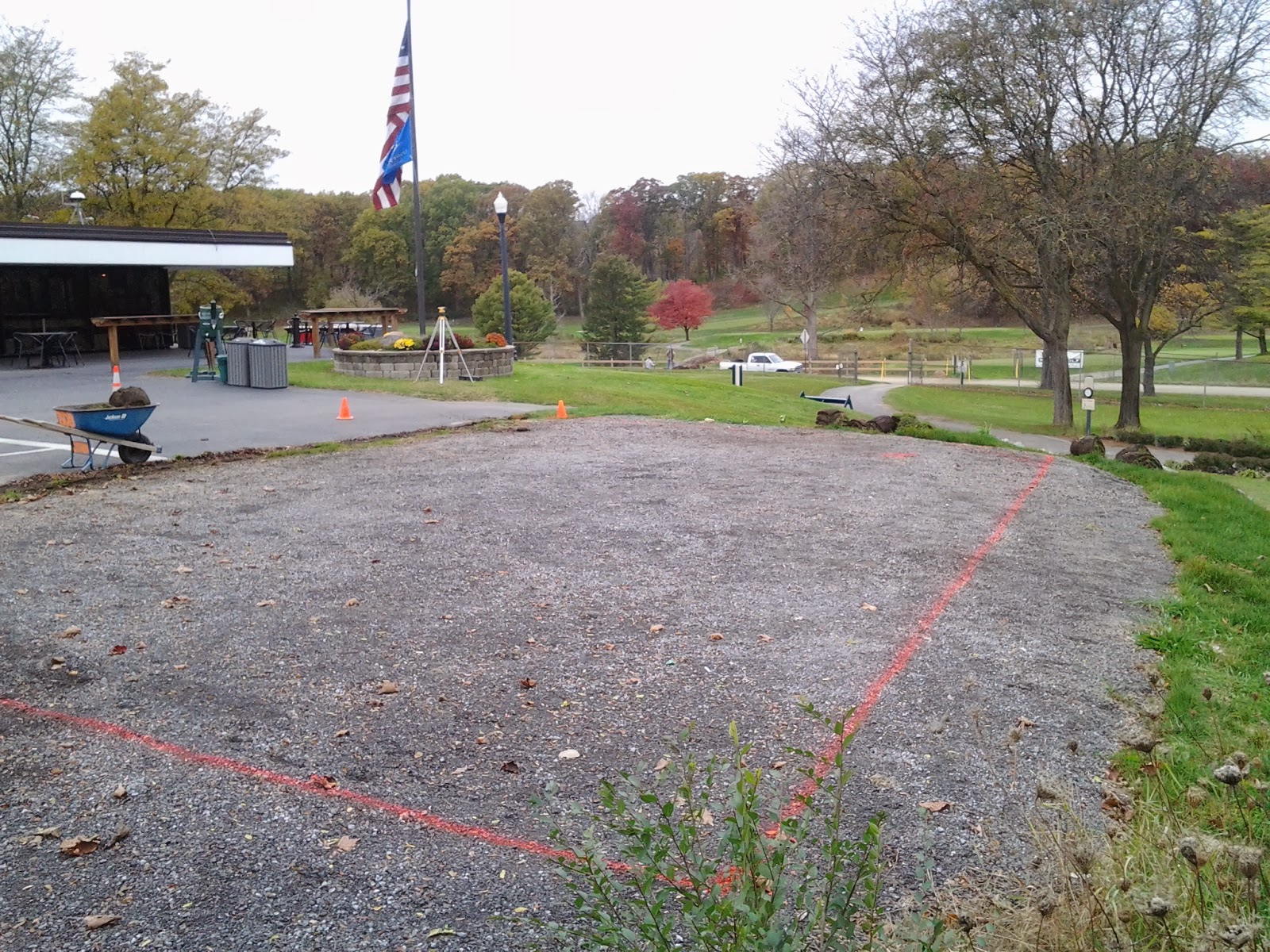
The area before the pavers are installed. The orange line indicates the border of the bricks.

Another view before the pavers were put down.

Pallets of bricks staged for use.

The guys in the foreground are laying bricks while the guys in the background are compacting the sub-surface.

The border is called a "soldier" course because it keeps the rest of the patio in line. Bricks will be cut into triangles to fill in the gaps. The herringbone pattern prevents water from flowing between the bricks as it drains off the parking lot.

The finished patio.

Looking from the clubhouse. It will look much nicer with tables and chairs up there.


Thursday, August 30, 2012

Project Update


On August 29th, we began the yearly ritual of greens aerification. We started with the practice green because it is a good way to familiarize the workers that have not aerification before with how it works and what needs to be done. This year, we were also trying out a new core collector from Turf Pride. This collector is attached to the back of the aerifier and pulls the cores along. At the end of the pass when the aerifying head is raised, the cores are dumped into a pile at the edge of the green.

Here you can see the aerifier with the collector attached.

An action shot. Notice the piles of plugs in the background.

The collector at work.

In previous years, we had too shovel the plugs into the middle of the green and then pick them up. This collector will deposit the plugs on the edge of the green and allow us to use less manpower to get the greens aerified. It will hopefully also allow us to get them done faster. Here is a video from three years ago on #17 green.

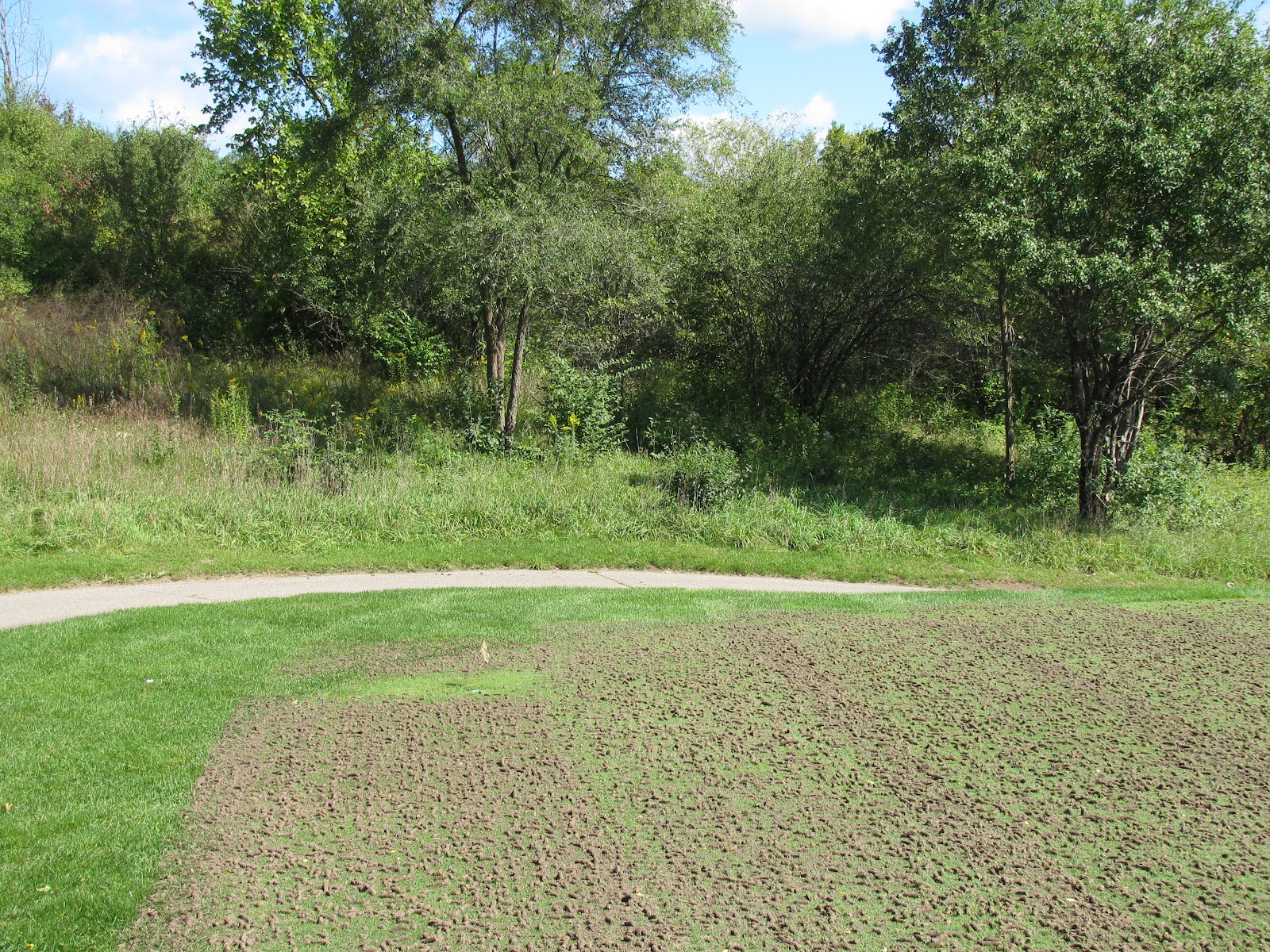
After the cores are removed, we end up with 3/8 inch holes on 2 inch centers.

The collector came with two different collecting scoops. The first one ended up rising up over the plugs after a long pass and leaving cores on the green. After switching them out, the green was much cleaner.
First pass with the collector installed.

We will do the back 9 greens on the Tuesday after Labor Day and the front 9 on the next day, the 5th of September. With the small holes and some co-operation from mother nature, within 10 days, you should not even notice the holes.

In other news, some of the areas that did not survive the drought and heat of this summer are starting to sprout new grass.


Here is the fairway on #9. You can see the lines of bentgrass seedlings that we put down using the slit seeder.


This is in the rough between #4 and #5. The bluegrass/ryegrass mix is starting to sprout in the aerification holes.


Friday, March 2, 2012

February 2012 Weather Summary

The high temperature for February, 2012 was 51 degrees, on the 1st. The lowest temperature at Leslie Park during the month was 10.5 degrees on the 11th.  The average temp was 32.5, just over the freezing point. Only two days had high temperature that was below 32. Let me repeat that, only two days in February did not get above freezing. 25 days had low temps below 32 degrees.

We had 0.06 inches of rain. All of it came  on the 27th. This was also the day that saw the highest wind speed recorded (30.0 mph.)  The average wind speed was 4.3 mph.

Wednesday, February 15, 2012

Photos in the dead of winter

Last week, I was driving around with a volunteer who helps me cut down invasive shrubs during the winter. He remarked about how green the course was, for February. Forward to today. I have been organizing the photos on my computer when I took a second look at some of the photos. It struck me just how GREEN things really are in the summer. Right now, things are kind of monochrome. Mostly brown and white. The green that we see is really a greenish-yellow. Here are some photos to brighten your day. Every day is one day closer to opening day!
#4 green, looking back toward the fairway.

#7 green, in the fall of 2011.

#9 fairway, early morning.

The weather station, with native indiangrass in the foreground. I love the blue sky contrasted with the green grass.

Bumble bee on some Joe-pye-weed

Blue-flag iris in the native plant garden on #12

Lilac Cherry blooms. (Thanks to reader J-Law for pointing it out.)

Cherry blooms between #6 green and #5 fairway.

Pear orchard behind #7 green. Native redbud tree in the foreground.

#8 green.

#13 fairway.


Thursday, January 12, 2012

Traver Creek Streambank Stabilization

The City of Ann Arbor (which owns Leslie Park Golf Course), in partnership with the Washtenaw County Water Resources Commissioner's Office, has proposed a streambank stabilization project for Traver Creek, which runs through Leslie Park. This project will be financed through the Michigan Department of Environmental Quality's State Revolving Loan Fund. There is an opportunity for up to 50% of the cost of the project to be forgiven depending on the level of environmentally sound practices utilized during restoration. The funding would come out of the city and county stormwater budgets over the next 20 years. The city of Ann Arbor is at the forefront of municipalities in the state of Michigan in using stormwater funds to proactively manage water courses to positively effect stormwater quality during high-precipitation events. What this means is that the city uses these funds to ecologically manage surface water instead of just fixing broken or damaged sewers.

The goals of the project are functional (by improving stormwater infrastructure), ecological (sediment removal, phosphorous reduction and habitat improvement) and recreational (improving aesthetics on the golf course). The golf course will be partnering with the city water quality manager and the county's water resources office as well as Ann Arbor's Natural Areas Preservation Division and the Huron River Watershed Council to make sure that this project meets the environmental goals that have been set forth.

The Spicer Group has been brought aboard to develop a plan and assess the hydrologic, hydraulic and geomorphic conditions that occur on Traver Creek. If all goes according to plan, construction will begin in November 2012, with major construction completed before April 2013. A major consideration for all parties involved is to impact golf as little as possible. Although the construction will be complete, it could take up to two full seasons before Traver Creek and the habitat surrounding the creek areas fully mature. During the first season, most of the banks will be populated by grasses whose primary purpose is to hold the soil in place while the perennial native plants take hold.

It is important to note that at this point, no plans have been finalized, so it is nearly impossible to know what the final project will look like or involve. A write-up of the proposal that was brought before the Ann Arbor Parks Advisory Committee was featured in the Ann Arbor Chronicle.

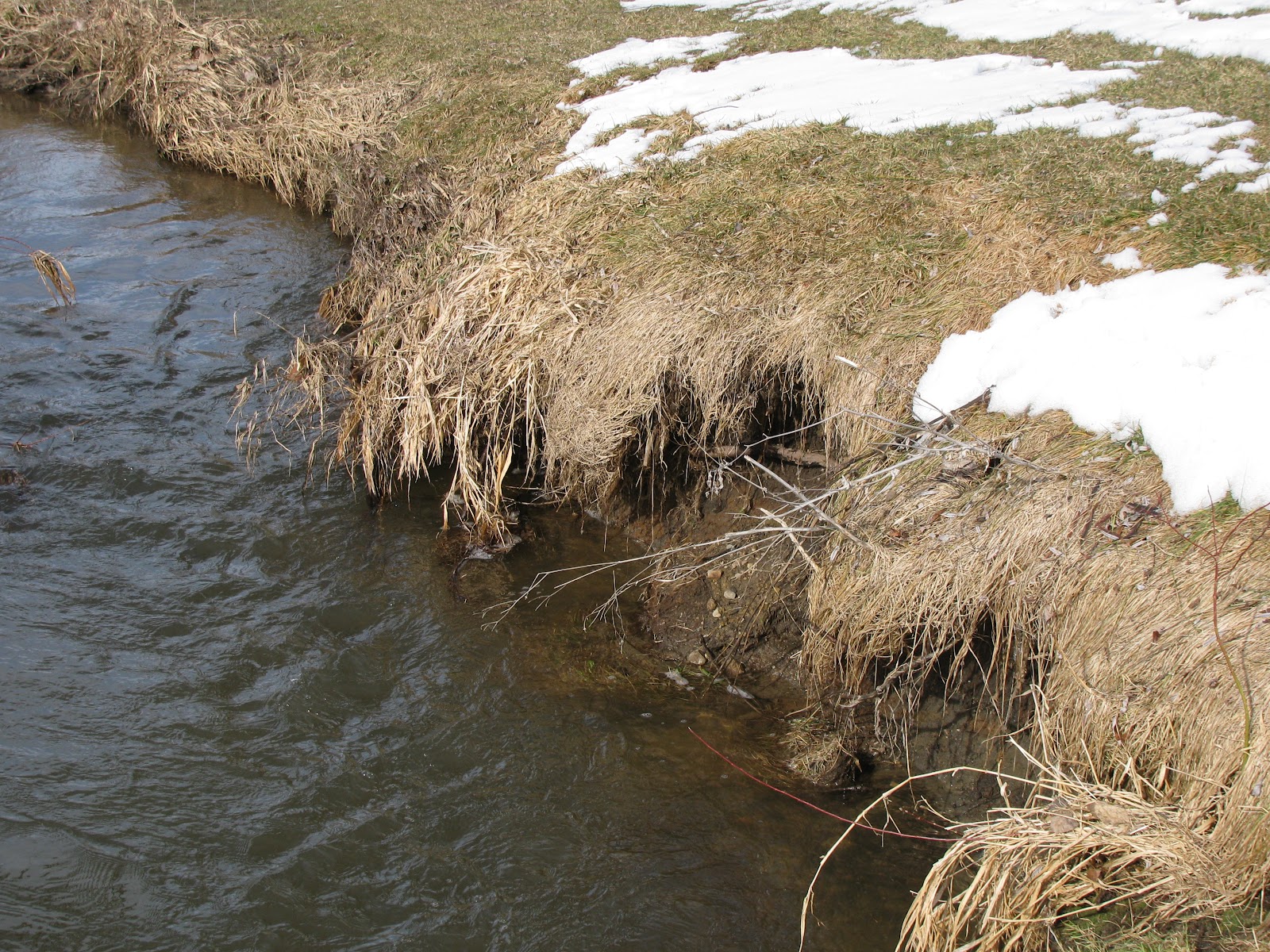
Below are some photos of the erosion and overflow problems that we have seen. You may remember a similar, though much smaller scale, project from the Summer of 2010. You can find out more HERE. I will keep you updated on this exciting project as we know more.


Thursday, October 20, 2011

Fall Projects

It has been a busy couple of months here at the golf course. We are almost done with aerification. Only #16 fairway has yet to be completed. We will then do selected approaches and tees a second time. Next week, we will blow out the irrigation system.

The two biggest projects so far this fall have been a drainage project on #16 fairway and a new tee box for #11.

The drainage on #16 involves the landing area about 240 yards from the green on this long par 5. For the last several years, we have not been able to mow this part of the fairway until June or July. This year, it never really dried up. It had been on my list of things to do when we got a chance, but the wet weather this year moved it up the list.

This is the transit that we used to make sure the drainage would drain properly.

A picture of the pipe in the ground before we hooked it together and filled it in with pea stone.

Another view before pea stone was added.

Laying the pipe on the pea stone and filling in the trench.

Cutting the pipe to length.

This is how the area looks today, over a month later. The trench was seeded with bentgrass. I think you will be able to tell where the trench was for years to come, but it has dried the area up noticeably.


The second project was to add a new championship tee to #11. This par 5 was often the easiest hole during the tournaments, with numerous birdies and even eagles recorded. This tee box will add 22 yards onto the hole from the current black tee markers.  Overall length could go up to 504 yards.

This is where the tee is going to be. Notice the aerification plugs on the tee.

After removing some trees and starting the project with our front-end loader.

I decided a bulldozer would make the work go easier. Luckily, the city has it's own little 'dozer.

Here, the tee has been leveled and tee mix (80% sand, 20% soil) has been put on top.

We laid bluegrass sod around the perimeter and seeded the actual tee with bentgrass.

The view from the back, right corner.

Ten days later, the bentgrass has started to grow. (The blue pellets are mulch that we put down to help with moisture retention.)

A close-up of the seedlings and mulch.


The tee should be open for use by May. Good luck!