Showing posts with label spring green-up. Show all posts

Monday, March 19, 2012

Golf and Burn Season is Underway

With the near-record warmth, we opened the golf course on March 14th.  High temperatures are expected to be in the seventies for the next 7 days or so. Welcome to the golf season! For the record, last year (2011) we opened on March 31st. In 2010, we opened on March 23rd.

Coinciding with this nice weather came low humidity and the first burn day of 2012. We use controlled burns to keep the weed populations low in our naturalized areas that are out of play.


We co-ordinate our burns through the City of Ann Arbor Natural Areas Preservation (NAP)  department. From the NAP website: Our native Ann Arbor ecosystems are fire-dependent. Until settlers began suppressing fires in the early 1700s, fire enriched the soil and removed dead thatch, allowing diverse native plant and animal communities to thrive. Continued fire suppression has disrupted the natural balance and allowed fire-intolerant, non-native plant species to out-compete the native, fire-adapted plants. By reintroducing fire in our parks, we are reinstating an essential ecosystem process.

Some pictures of burns we have done in the past:

Before burning (2010)

After burning.

2 weeks after burning.

2 months after burning.

As you can see, the grasses come back extremely fast. The invasive shrubs have been set back, but are sprouting back from the root system. In subsequent years, these shoots will be set back even more. It sometimes takes 4 or 5 years of annual burning before a noticeable amount of these invasive shrubs are killed.


Wednesday, February 15, 2012

Photos in the dead of winter

Last week, I was driving around with a volunteer who helps me cut down invasive shrubs during the winter. He remarked about how green the course was, for February. Forward to today. I have been organizing the photos on my computer when I took a second look at some of the photos. It struck me just how GREEN things really are in the summer. Right now, things are kind of monochrome. Mostly brown and white. The green that we see is really a greenish-yellow. Here are some photos to brighten your day. Every day is one day closer to opening day!
#4 green, looking back toward the fairway.

#7 green, in the fall of 2011.

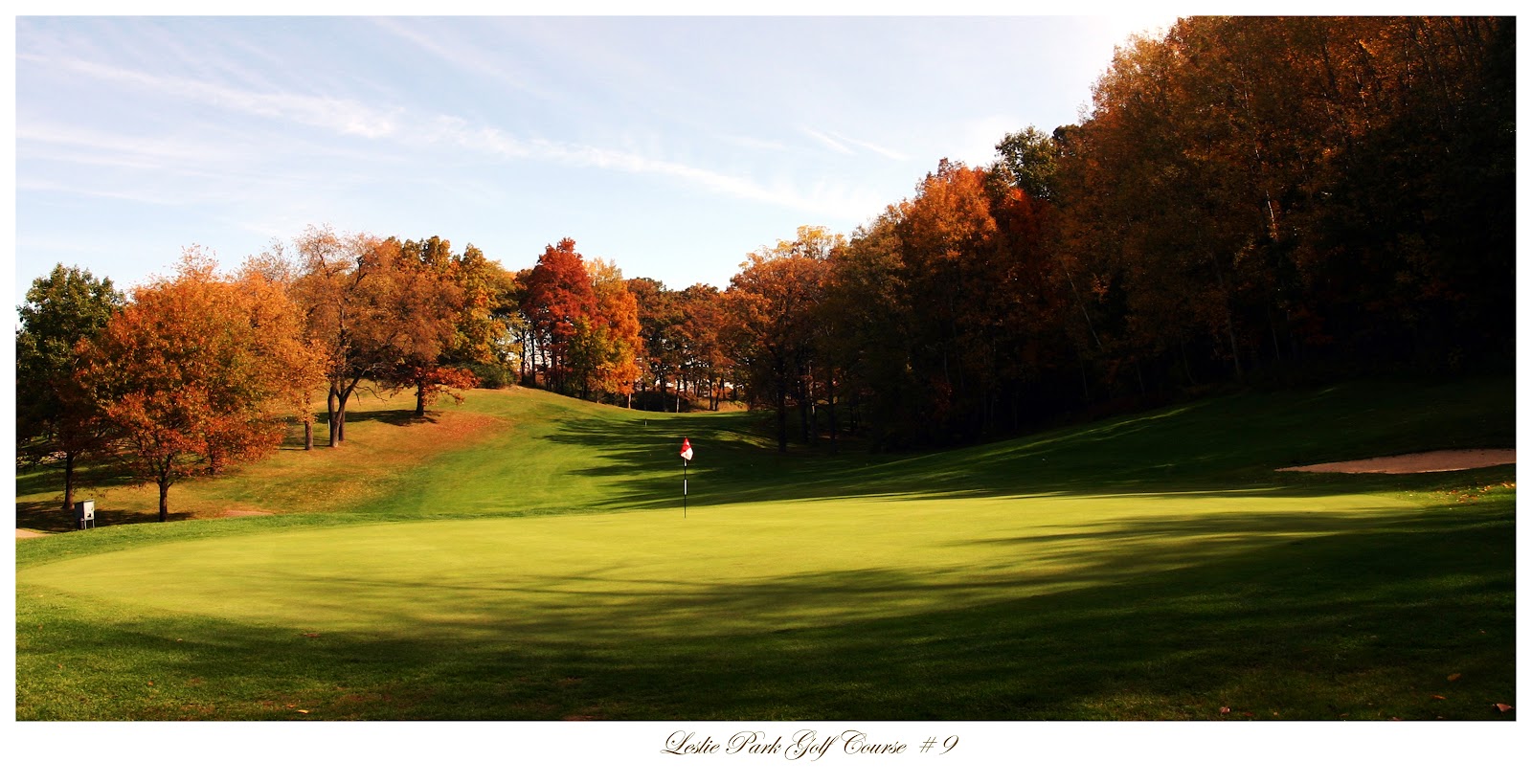
#9 fairway, early morning.

The weather station, with native indiangrass in the foreground. I love the blue sky contrasted with the green grass.

Bumble bee on some Joe-pye-weed

Blue-flag iris in the native plant garden on #12

Lilac Cherry blooms. (Thanks to reader J-Law for pointing it out.)

Cherry blooms between #6 green and #5 fairway.

Pear orchard behind #7 green. Native redbud tree in the foreground.

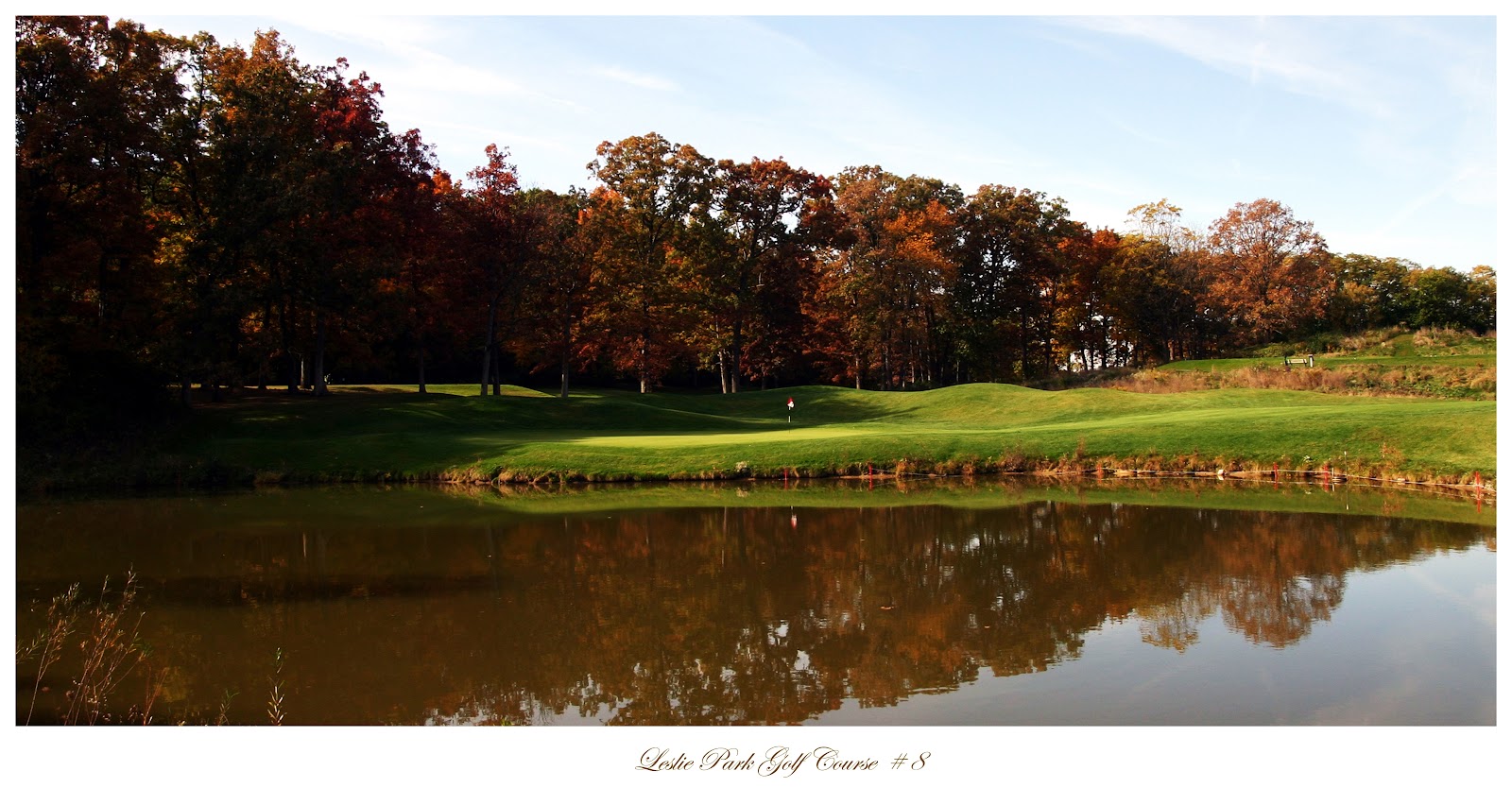
#8 green.

#13 fairway.


Monday, September 19, 2011

Months ending in "ber"


The last four months of the calender year are the beginning of the year for a golf course. I was told this by David Heroian, the Superintendent of the Myopia Hunt Club in South Hamilton, Massachusetts, where I did my internship in the summer of 1998. The thinking behind this is that everything that you do during the Autumn is in preparation for next summer. For some reason, a large portion of the golfers put away their bags after Labor Day. This may be due to football, the kids going back to school or some other reason, but play really drops in the fall. It shouldn't be the weather, because in my opinion, the fall is the best time to play golf. On many days in September and October, the high temperature will be in the upper sixties or seventies with very few clouds. If we are lucky enough to have this type of weather in April or May, golfers will be lining up to get out on the course. Of course, after a long winter, cooped up inside, I don't blame them for wanting to get outside. During the fall, this same weather will be met with open tee times and discounted rates.

This drop in play gives us an opportunity to perform some maintenance that is disruptive to golfers. The biggest one is the dreaded "aerification." When the greens are aerified, the ball roll can be slowed down and if the holes are not properly filled, the greens can be bumpy. If we can get out and aerify while the grass is still actively growing, this disruption will only be about seven to ten days. When it is put off until later in the year (mid to late October in south-east Michigan) this period can last 2 weeks or more. If the weather does not cooperate, the greens might not fully heal until the spring. Last year, we aerified greens on the 16th and 17th of September. Many times in the month of October, I was asked when we were going to aerify our greens. They had no idea that they were already done, due to us taking advantage of the warm weather.

The tees and fairways are also aerified in the fall. This presents less of a problem for golfers. On the tees, the holes do not come into play because the golfer is allowed to choose where he will hit from and will usually put the ball on a tee. The fairways have longer grass and as with greens, if the holes are filled properly, it should be fully healed in a week or so. Most of the disruption will be one the day that we actually are working on the hole. This will usually only be two or three holes, due to the large areas that we are talking about. Most of our fairways are between one and two acres in size.

Fall is also the time when the summer stress is done with for the most part and the grass will start growing roots again. In Michigan, the predominate grasses used on golf courses are "cool-season" grasses. This includes Kentucky Bluegrass, Creeping Bentgrass, Ryegrass and Fescue. These grasses grow best with the temperatures between 60 and 80 degrees. "Warm-season" grasses such as Zoysia and Bermuda (as well as Crabgrass, which isn't a turfgrass, but a weed) don't start to really grow until the temperature reaches 75 degrees and will thrive until it hits 90 or so. When the temperature gets above 80, cool-season grass begins to shut down and go dormant. This is why areas that don't get irrigation will often turn brown in July and August. When this happens, the grass is just trying to survive and often the roots start to retract. At the end of August, we are lucky to have 2 inches of roots on the greens. By the end of October, I hope to have 4-5 inches of roots. The healthier the grass is going into winter, the better it will be in the spring.  Aerification allows the roots a nice , friendly place for new roots to grow. It also allows oxygen to get down into the rootzone.

Fall is also a great time to control weeds. Most of the weeds that we have on the golf course are "winter-annuals." This means that the weeds sprout in the summer and then over-winter and really take-off in the spring and set seed for the next generation. Because of this and the fertilizer needs of the grass (the fertilizer that we put on the fairways in the spring is pretty much gone) right now is a great time for a "weed-and-feed." This is a fertilizer that is coated with a broadleaf herbicide. It makes sense from a couple of standpoints. The first is that we accomplish two goals with one application. The second is that we can save money. If I were to buy a granular herbicide, the manufacturer would have to coat something with the herbicide. This is often ground-up corncobs. If you do a weed and feed, the fertilizer is what is coated with the herbicide. As one salesman has told me, it is like you buy the herbicide and you get the fertilizer for free. Of course, you don't get anything in this world for free, but if you compare prices, if fertilizer costs $20 and herbicide costs $25, the combined product would cost $30. (I am totally making these prices up, don't quote me on any of this.)

During the early winter months, the grass stops growing and we start on preventative maintenance on our equipment. We change the engine oil, hydraulic oil, fuel and air filters on all of the mowers. We also change the oil on the golf carts, as well as check the filters and spark plugs on the carts. The tee, green and fairway mowers all have reels and bedknives that need to be ground and sharpened. The rough mowers have blades that need to be sharpened. We also clean up the shop. During the hectic summer months, it can get quite messy.


These are just a few of the reasons that, as a golf course superintendent, you cannot trust the calender. The New Year starts in September.

P.S. A big thank you to Robb Johnston for the title of this post. Robb works for the City of Ann Arbor's Natural Area Preservation Unit.  He also is a childrens author. Check out his blog for The Woodcutter and the Most Beautiful Tree


Wednesday, April 27, 2011

Rain

3.68 inches!

That is the amount of rain we have had in the month of April, so far. It looks like more is on the way tonight. According to Weather Underground, 1.85 inches (ed: weather.com says 3.3 inches is normal) is normal for the month of April. What this means is that we are wet.

Some other things that have been going on:

We planted 9 cherry trees and 3 apples trees in the orchard. Most of the cherries are at the north end of the orchard, near #7 green. This is just replacing trees that have died over the last forty years since the course was built. This is one of my favorite projects out here. The orchard belonged to the original farm owned and operated by Dr. Eugene Leslie. They would sell apples, pears, cherries and raspberries to the local citizens. The orchard is a signature of holes 6 and 8, as many drives make it into the tightly packed trees. Last year we replaced 10 cherries, 8 apples and 7 pears. I have counted around 40 more spots where trees have been cut down in the past and not replaced. My plan is to fill these areas in so that there is a fruit tree every 15 feet in this section. 10- 15 trees a year should see this plan done in the next 5 years.

We had these little guys drop by for a few days.


They are Bufflehead Ducks (Bucephala albeola) They stopped by on the migration north.


This last picture is my attempt at a close up of some lilac buds getting ready to burst.

Friday, February 18, 2011

Warming Trend

Thanks to the last couple of days, with temperatures near 50 degrees, most of the snow we had in the last couple of weeks is gone. Greens 5, 8, 9 and 11 still have a fair amount of snow but the rest of them are pretty clear. With that, Leslie Park is hoping to open up the around the 25th of March. Huron Hills could be open as soon as March 4th.

Thursday, March 4, 2010

MELT!!!!!!!!!!!!!!!!!!!!!!!!!!!!

We are waiting for the snow to melt. The snow quantity and quality make it hard to get around the golf course right now, so mostly I have been doing projects in the shop. I have built a couple of wood duck houses, a couple of bat houses as well as some store bought bluebird houses and a butterfly house. I have been working on recertifiying our Michigan Turfgrass Environmental Stewardship Program credentials and begining the Audubon Cooperative Sanctuary Program certification. I have a new weather station that will be going up. It will give me such readings as temperature, humidity, solar radiation, wind speed and direction. This will help me calculate daily evapotranspriation rates (the amount of water a plant uses in a day) as well as posting a daily weather log on sites like weatherunderground.com. This weekend looks like it will be warm and we should be able to get out more and start the spring clean-up.

Monday, February 8, 2010

1st year on the job

One year ago, I started my work here at Leslie Park. 2009 was a good year and I had to hit the ground running. Luckily, my predecessor, Charlie Gaige, had left the course in great shape for me and I was able to spend the first couple of weeks getting situated inside my office. I was also able to go through a lot of old documents and reorganize.

Once the snow was gone in March, I was able to determine that we had some winter kill on greens 5, 8 and 9 as well as some on 9 fairway. This winterkill happened after we got some rain, followed by freezing temperatures and a lot of snow. What this meant was that these areas had a layer of ice for around 60 days. Even though the grass was dormant, it still needed to respire or breathe. the ice layer prevented this and some of the grass subsequently died. We hit these areas with some seed but it was still well into May before all of these areas were completely healed. This winter, I do not think we will have this problem again but I have noticed some ice on a few greens, especially on #5. This is something I will be keeping an eye on and if we get a day or two with temps in the 40's, I will probably try to physically remove the ice from some of these areas.

Also, if you remember, last spring was particularly cool and damp. This meant that the new greens were slow to green up. #1, 8, 10, 11 and 17 greens were rebuilt and re-grassed during the renovation back in 1994. When this happened, the grass variety that was chosen was a compromise between early green-up and summer heat tolerance. The result is that, while those greens are well adapted to summer weather and hold up better to temperature above 80 degrees, they are slow to get started in the spring.

We are currently gearing up for the 2010 golf season and we are currently hoping to open in the last week of March. Of course, it is all dependant on weather, so keep your fingers crossed.

All for now

Scott