Showing posts with label Michigan. Show all posts

Friday, January 16, 2015

Curling for Ice Research

Last Friday, there was a fund raiser for research on ice damage on turf. The event was put on through the Michigan Golf Course Superintendents Association at the Detroit Curling Club. While we at Huron Hills and Leslie Park escaped massive turf injury, many golf courses in south east Michigan lost grass due to being under ice for up to 10 weeks last year. The Michigan Turfgrass Foundation (MTF) and Michigan State University have made it a priority to stop further issues like this in the future.

One of the ways the MTF has done this is by purchasing a Low Temperature Chamber for winterkill research. The money raised by this event will go toward more equipment and other supplies for Dr. Frank to use for this effort. (I paid for the event using my own money, no city funds were used, FWIW.)

The 32 MiGCSA members pose for a group photo.


Receiving instruction from DCC members.


Learning the finer points of sweeping the stones.

It was a lot to take in. It is not as easy as it looks.

My first try in "the hack."

The man on the right is Dr. Frank. Greg Pattinson (Superintendent at Indianwood) and I scored 7 points here against Dr. Frank and his team. There are only 8 possible points in an end, btw.


Friday, March 2, 2012

Commercial Applicator Test

Commercial Pesticide Applicator Testing. That is what the Michigan Department of Agriculture - Pesticide and Plant Management Division calls what I did yesterday morning.

The Federal Insecticide, Fungicide and Rodenticide Act (FIFRA) is administered by the Environmental Protection Agency (EPA.) Under FIFRA, the EPA is responsible for registering or authorizing pesticide products for use in the United States.  The two main classifications of pesticides are unclassified or general-use pesticides (GUP) and restricted-use pesticides (RUP). Restricted-use pesticides may only be sold to a certified pesticide applicator. There are two categories of certified applicators, private applicators and commercial applicators. Commercial applicators are individuals who use or supervise the use of any RUP on property the he does not own or lease. Willful violations of FIFRA are subject to fines of up $25,000 and up to one year imprisonment.

Other federal laws and regulations that govern pesticide application include:

The Worker Protection Standard (WPS), aimed at reducing pesticide exposure to agricultural workers and pesticide handlers.

The Endangered Species Act (ESA), the relevant sections of this law compel the EPA ensures that no registered pesticide use is likely to jeopardize the survival of any endangered or threatened species.

The Federal Food, Drug and Cosmetic Act (FFDCA), sets tolerances for pesticide levels on food for human and/or animal consumption. (Not really relevant to turf and golf courses.)

The Food Quality Protection Act, set a tougher standard for pesticides that will be used for food. (Again, not relevant to golf courses.)

What this means is that, as a golf course Superintendent, I must take a test every three years to maintain my commercial pesticide applicator standing. This entails a core manual, which covers basics of pesticide use and handling (as well as the laws that I just laid out) and then a category of pesticide use.

The "core" test involves a 75 question test. A score of 70% is required to pass. I scored a 70/75. (I put the numbers up here, not to brag, but because I assume everyone would want to know how I did.) Each of the "category" test has a 50 question, multiple-choice test. Once again, 70% or better is need to pass. I took tests in Fruit Crops (1C) where I scored 43/50, Aquatics (5) where I scored 40/50 as well as a category called 6J. This is a combined test where Turfgrass (3A), Ornamentals (3B) and Right-of-Way (6) are rolled into one, 125 question test. These three categories are a common grouping, especially for golf courses and landscaping companies. This would allow an applicator to spray lawns (turfgrass), roses (ornamentals) and parking lots (right-of-way) while eliminating some of the questions that each test would have in common. I scored 101/125 on 6J.

This is just a small view of some the the things that go on behind the scenes, as well as during the winter. I will need to re-certify again in 2015, it looks like I need to do some studying.

February 2012 Weather Summary

The high temperature for February, 2012 was 51 degrees, on the 1st. The lowest temperature at Leslie Park during the month was 10.5 degrees on the 11th.  The average temp was 32.5, just over the freezing point. Only two days had high temperature that was below 32. Let me repeat that, only two days in February did not get above freezing. 25 days had low temps below 32 degrees.

We had 0.06 inches of rain. All of it came  on the 27th. This was also the day that saw the highest wind speed recorded (30.0 mph.)  The average wind speed was 4.3 mph.

Monday, September 19, 2011

Months ending in "ber"


The last four months of the calender year are the beginning of the year for a golf course. I was told this by David Heroian, the Superintendent of the Myopia Hunt Club in South Hamilton, Massachusetts, where I did my internship in the summer of 1998. The thinking behind this is that everything that you do during the Autumn is in preparation for next summer. For some reason, a large portion of the golfers put away their bags after Labor Day. This may be due to football, the kids going back to school or some other reason, but play really drops in the fall. It shouldn't be the weather, because in my opinion, the fall is the best time to play golf. On many days in September and October, the high temperature will be in the upper sixties or seventies with very few clouds. If we are lucky enough to have this type of weather in April or May, golfers will be lining up to get out on the course. Of course, after a long winter, cooped up inside, I don't blame them for wanting to get outside. During the fall, this same weather will be met with open tee times and discounted rates.

This drop in play gives us an opportunity to perform some maintenance that is disruptive to golfers. The biggest one is the dreaded "aerification." When the greens are aerified, the ball roll can be slowed down and if the holes are not properly filled, the greens can be bumpy. If we can get out and aerify while the grass is still actively growing, this disruption will only be about seven to ten days. When it is put off until later in the year (mid to late October in south-east Michigan) this period can last 2 weeks or more. If the weather does not cooperate, the greens might not fully heal until the spring. Last year, we aerified greens on the 16th and 17th of September. Many times in the month of October, I was asked when we were going to aerify our greens. They had no idea that they were already done, due to us taking advantage of the warm weather.

The tees and fairways are also aerified in the fall. This presents less of a problem for golfers. On the tees, the holes do not come into play because the golfer is allowed to choose where he will hit from and will usually put the ball on a tee. The fairways have longer grass and as with greens, if the holes are filled properly, it should be fully healed in a week or so. Most of the disruption will be one the day that we actually are working on the hole. This will usually only be two or three holes, due to the large areas that we are talking about. Most of our fairways are between one and two acres in size.

Fall is also the time when the summer stress is done with for the most part and the grass will start growing roots again. In Michigan, the predominate grasses used on golf courses are "cool-season" grasses. This includes Kentucky Bluegrass, Creeping Bentgrass, Ryegrass and Fescue. These grasses grow best with the temperatures between 60 and 80 degrees. "Warm-season" grasses such as Zoysia and Bermuda (as well as Crabgrass, which isn't a turfgrass, but a weed) don't start to really grow until the temperature reaches 75 degrees and will thrive until it hits 90 or so. When the temperature gets above 80, cool-season grass begins to shut down and go dormant. This is why areas that don't get irrigation will often turn brown in July and August. When this happens, the grass is just trying to survive and often the roots start to retract. At the end of August, we are lucky to have 2 inches of roots on the greens. By the end of October, I hope to have 4-5 inches of roots. The healthier the grass is going into winter, the better it will be in the spring.  Aerification allows the roots a nice , friendly place for new roots to grow. It also allows oxygen to get down into the rootzone.

Fall is also a great time to control weeds. Most of the weeds that we have on the golf course are "winter-annuals." This means that the weeds sprout in the summer and then over-winter and really take-off in the spring and set seed for the next generation. Because of this and the fertilizer needs of the grass (the fertilizer that we put on the fairways in the spring is pretty much gone) right now is a great time for a "weed-and-feed." This is a fertilizer that is coated with a broadleaf herbicide. It makes sense from a couple of standpoints. The first is that we accomplish two goals with one application. The second is that we can save money. If I were to buy a granular herbicide, the manufacturer would have to coat something with the herbicide. This is often ground-up corncobs. If you do a weed and feed, the fertilizer is what is coated with the herbicide. As one salesman has told me, it is like you buy the herbicide and you get the fertilizer for free. Of course, you don't get anything in this world for free, but if you compare prices, if fertilizer costs $20 and herbicide costs $25, the combined product would cost $30. (I am totally making these prices up, don't quote me on any of this.)

During the early winter months, the grass stops growing and we start on preventative maintenance on our equipment. We change the engine oil, hydraulic oil, fuel and air filters on all of the mowers. We also change the oil on the golf carts, as well as check the filters and spark plugs on the carts. The tee, green and fairway mowers all have reels and bedknives that need to be ground and sharpened. The rough mowers have blades that need to be sharpened. We also clean up the shop. During the hectic summer months, it can get quite messy.


These are just a few of the reasons that, as a golf course superintendent, you cannot trust the calender. The New Year starts in September.

P.S. A big thank you to Robb Johnston for the title of this post. Robb works for the City of Ann Arbor's Natural Area Preservation Unit.  He also is a childrens author. Check out his blog for The Woodcutter and the Most Beautiful Tree


Wednesday, February 3, 2010

Beginnings

"A beginning is the time for taking the most delicate care that the balances are correct."

That is the first sentence from the 1965 science fiction classic Dune by Frank Herbert. I thought it was fitting for the beginning of this blog as well.

Let me now take some time to get the balances correct and give you some background.

My name is Scott Spooner and I am the Superintendent of Leslie Park Golf Course in Ann Arbor, Michigan. Leslie Park is owned by the City of Ann Arbor (along with Huron Hills) and as such, is considered a municipal golf course or "Muni." I first came to Leslie Park (LP) nearly one year ago after working for nearly 10 years as a wandering golf course superintendent in south east Michigan.

I have a Bachelors degree from the University of Michigan as well as a two year certificate in Golf Course Management from Michigan State University.

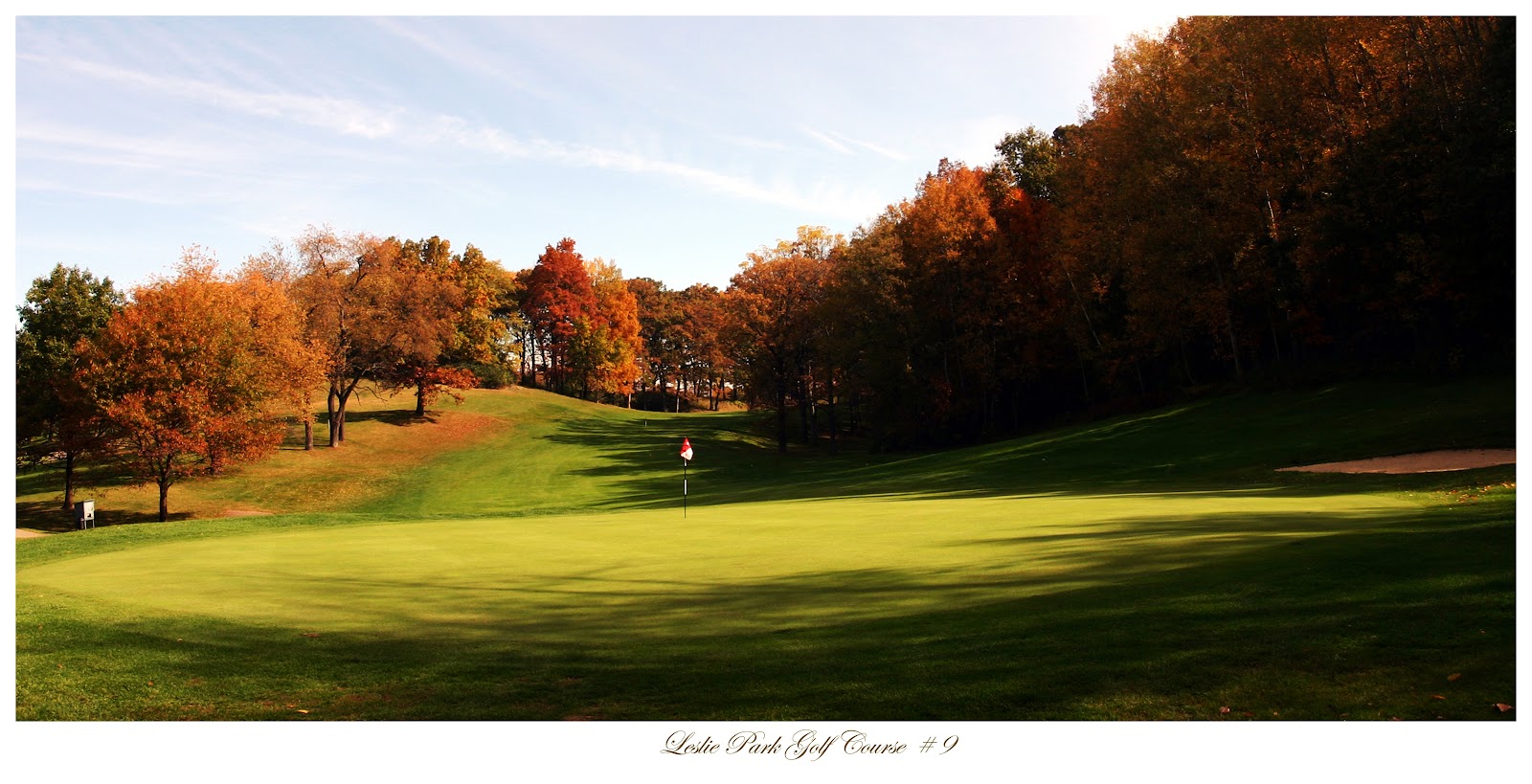
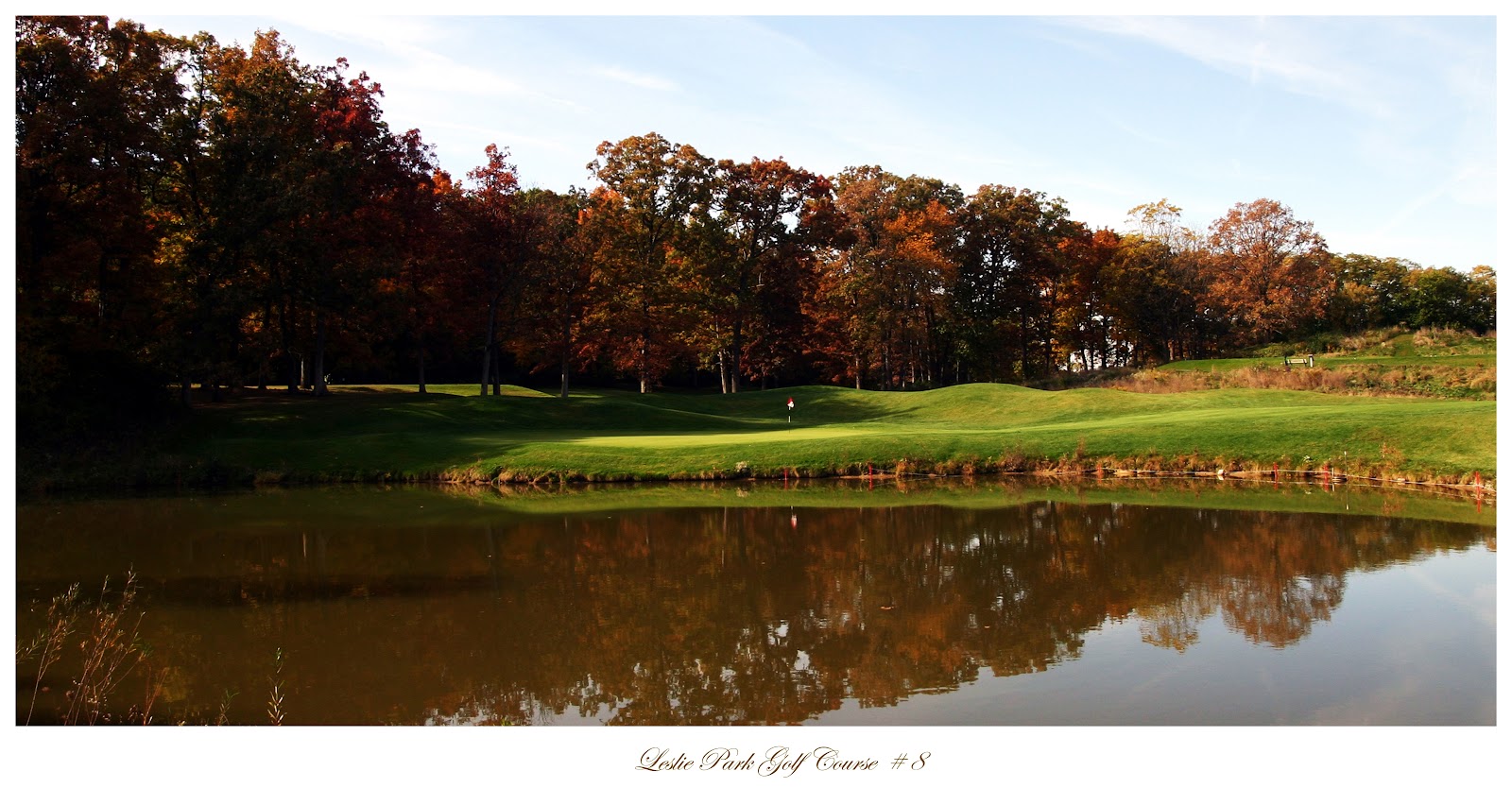
Leslie Park was originally a farm owned by Dr. Leslie, a professor at the University of Michigan. You can see some of this farm genealogy when you see the old orchard located between #6 fairway and #8 tee. The land was donated to the city and turned into a golf course in 1967. A major renovation was undertaken in 1994-95 with the redesign of 5 green complexes (#1, #8, #10, #11 and #17) along with some drainage and bunkers and the dredging of the irrigation pond, located along #17. At this time, the irrigation system was upgraded with new satellite controllers, a central computer control and a new pump house. This was all under the direction of Matt Warba, longtime Superintendent at Leslie Park.

Last year, the city of Ann Arbor rededicated itself to making the golf courses profitable and as such, committed a large amount of money to upgrading some things that had been neglected since that time. The equipment fleet was completely replaced with brand new Toro and Club Car machines. Also, the cart paths were resurfaced and lengthened in some areas while the bridges that cross Traver Creek that runs between #10 and #13 were completely replaced.

On the heels of this, Leslie Park was named the best "Muni" in the State of Michigan by Golf Digest, who was ranking the best Muni's in all 50 states. To put this in perspective, we rank amongst Bethpage Black in New York and Torrey Pines in California while charging around a sixth of what those course will get for a round. Of course, these rankings were based on previous year's conditions and thus, I owe a debt of gratitude to the previous Superintendent, Charlie Gaige. Charlie is now enjoying his retirement but the seven years of hard work he put in before I got here is much appreciated.

That is all I have time for at this time, I will try to update this Blog whenever something of interest pops up or when I can find some time to sit down at the computer. Also, check back for photos of the course that will be coming soon.

Thanks for reading

Scott